You've Been Scammed. Here's What to Do Right Now.
Scams are built by professionals to fool careful, smart people. You're not alone, and you can take back control. Follow these steps in order.

First, Take One Deep Breath
You have more control than it feels like right now. One calm minute now helps every step that follows. You've got this. Let's work through it together.
Follow These Steps in Order
Stop all contact with the scammer
Do this first.
- Stop replying to calls, texts and emails.
- Don't send more money, even if they threaten you or promise to fix things.
- Screenshot messages, emails and call logs before blocking. You'll need them for reports.
- Block their number, email and social accounts.
- Watch for anyone offering to “recover” your money for a fee. That's a second scam. Real help is free.
Secure your accounts
Email first, then banking, then everything else.
- Change your email password first. It can reset your other accounts.
- Change passwords on any account you shared.
- Turn on two-step login for email and banking.
- Shared bank details? Call the fraud number on the back of your card, not one found online.
- Someone had remote access? Disconnect from the internet first, then follow the remote access steps below.
Freeze your credit (if you shared personal info)
If you gave out your Social Security number, date of birth or full name, freeze your credit at all three bureaus. It's free and stops new accounts being opened in your name.
Report it
Your report helps protect others.
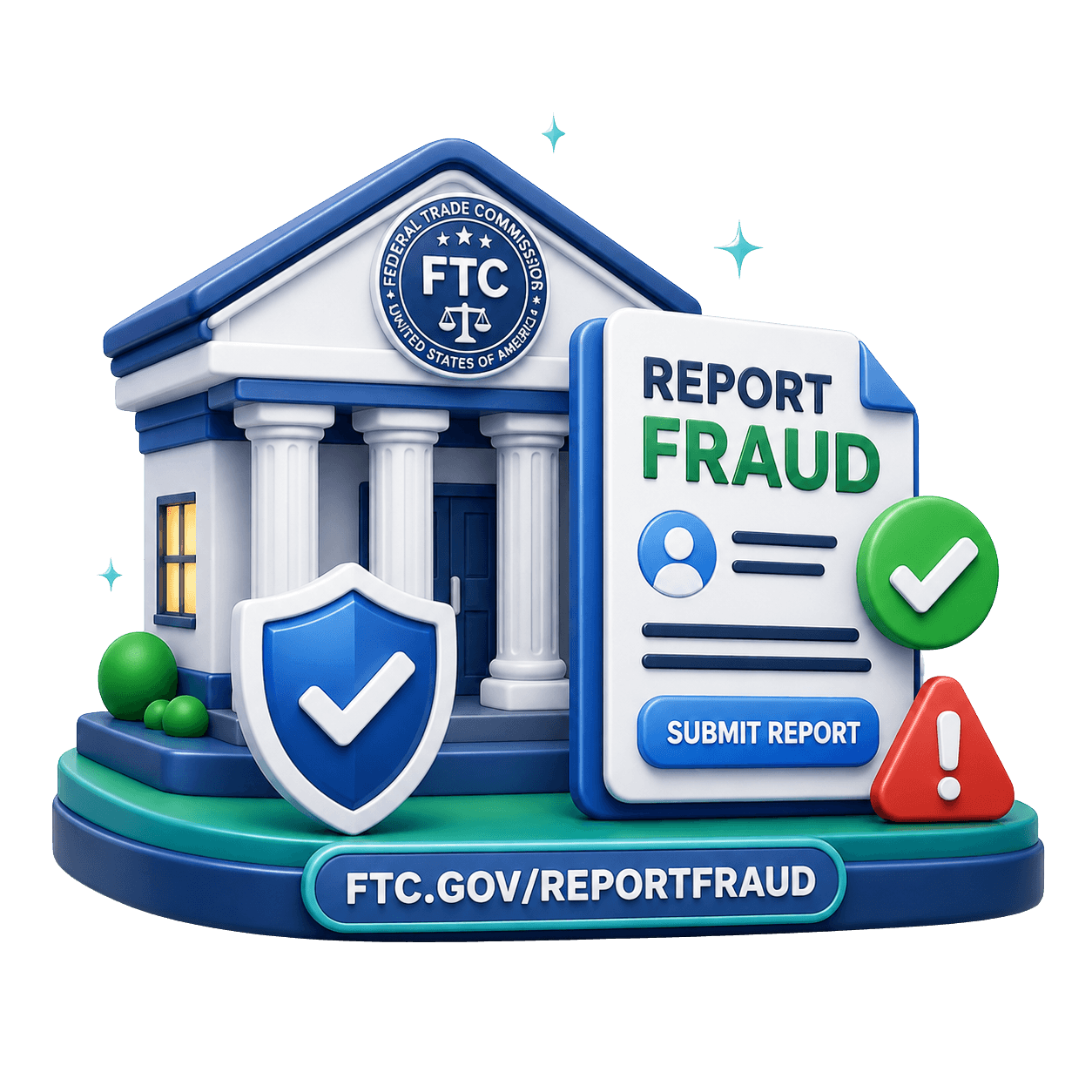
- FTC: reportfraud.ftc.gov
- FBI IC3: ic3.gov
- identitytheft.gov for a recovery plan
- File a local police report and keep the case number.
- Report the scammer's account on the platform where they contacted you.

Sent money? Act in the first 30 minutes.
Wire transfers, gift cards and payment apps can sometimes be stopped or reversed if you move fast. Call your bank or the payment service right now.
What Happened? Find Your Situation
Tap yours and follow the matching steps.
I gave someone my bank information
- Call your bank's fraud line right away (number on the back of your card).
- Ask for new account numbers and cards.
- Turn on account alerts.
- Check your statements daily for 30 days.
I sent money by wire transfer or gift cards
- Wire transfer: call your bank immediately and ask for a recall.
- Gift cards: call the gift card company with the card numbers. They may freeze the funds.
- Venmo, Zelle or Cash App: contact the app's fraud team and your bank.
- Report it to the FTC and FBI IC3 either way.
I clicked a link and entered my password
- Change that password now from a different device, plus anywhere you reused it.
- Run a full antivirus scan.
- Turn on two-step login for that account.
Someone had remote access to my computer
- Disconnect from the internet.
- Uninstall any software they had you install (like AnyDesk or TeamViewer).
- Run a full antivirus scan.
- Change all passwords from a different device.
- If you did online banking during the session, call your bank now.
I was hired for a job that wasn't real
- Stop replying to the “recruiter.” Don't send money or personal details.
- Installed something? Disconnect and follow the remote access steps.
- Got a check? Don't deposit it or send money back. Already deposited? Call your bank.
- Shared your Social Security or bank details? Follow the identity or bank steps.
- Report the job post on the job site and at ReportFraud.ftc.gov.
- Still job hunting? Use the free Job Offer Check.
Someone is using my identity
- Go to identitytheft.gov for a personal recovery plan.
- Freeze your credit at all three bureaus.
- File a police report and keep the case number.
- Contact your banks and credit card companies.
- Check your credit report for accounts you don't recognize.
I was targeted in a romance scam
- These scammers are professionals who build trust on purpose.
- Cut all contact now, even if they push back.
- Report it to the FTC and FBI IC3.
- Talk with someone you trust. This is a lot to carry alone.
- If you shared financial details, follow the bank steps above.
Where to Report It
Every report helps protect the next person. File at least one.

One More Thing, From Us to You
Scammers study psychology and use trust on purpose. Taking action now is the right move, and these steps protect the people you love too. Keep going.
Stay One Step Ahead of Scammers
Weekly scam alerts and plain-language safety tips. No spam.